Groundwater is the most commonly forgotten aspect of the water cycle, as it is not readily seen.
The water cycle is the constant movement of water through the environment, travelling as slowly as, possibly, a metre per year. Evaporation of the ocean’s water condenses into clouds ready for rainfall across the land, and after rainfall the surface water flows back into the rivers and the sea.
A substantial amount of the rainwater is absorbed by the earth’s soil. Whilst a small percentage is used by plants, vast volumes seep further down into the ground and rocks to become groundwater; this process is called infiltration. Any remaining rainwater evaporates into the atmosphere through the transpiration process.
Typically a water table occurs when the rocks are completely saturated. Water proceeds from the point of penetration to dispense into a spring, river or the sea. A majority of the water in a flowing river is fed by discharging groundwater.
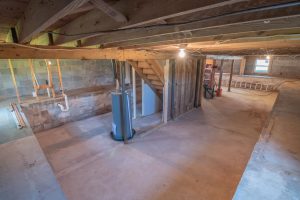
A potentially high water table increases the risk of waterproofing failure, and groundwater is not typically seen until an issue arises. As outlined within BS 8102:2022, it is critical to identify the watercourse before any structural waterproofing design commences, because underground water exists virtually everywhere.
Permeable formations allow water to penetrate through aquifers. Impermeable formations allow only minimal amounts of water to penetrate.
Prior to any construction, civil engineering or building works, a site investigation (SI) must be undertaken to BS 5930 standards, and any aggressive components in the groundwater must be confirmed before the correct waterproofing system is selected. BS 5930:2015 deals with the investigation of sites in order to assess their suitability for construction, and to identify the characteristics of a site that affect the design and construction of the project.